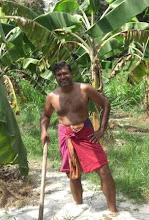
In four days it will be 5 years since I returned to Sri Lanka after being overseas, namely in the UK and the US since 1971. I have been meaning to write an update on my present evaluation of the pros and cons of this decision, but have not been able to get down to it yet. I however still expect to write something in detail in a future entry, if only as a record for me for future reference but also for those interested in making such a life changing decision, as it would help them better plan, learning from some of the mistakes I made along the way.
Many factors cumulatively have had a hand in my not being able to achieve the “Dream” I had in mind when I first arrived in Sri Lanka. I have had to modify my plans continuously as and when I had to face unforeseen obstacles along the way. I suspect that there are many more hurdles to be scaled before I achieve my utopia or at least some sense of normalcy that I am still craving for.
My single biggest failure in achieving my goals is that the workforce I employ, both young and old, have not been(despite my effort at every possible method) persuaded to follow the same goal I had set myself in the area of maximizing productivity of the area under our control, in whatever crop we mutually agreed was best to plant. This fact has convinced me that in order to achieve this objective, we have to minimize human interaction in these inputs, and use mechanical and electronic means of achieving these objectives. Gone are the days of peasant farmers. It is just an election winning subsidy that is counterproductive.
To explain what I mean, I had this lengthy plan, which we agreed soon after the disastrous previous harvest, that we do everything in our power, to maximize the yield both in kilograms, rupees and profit of the current paddy crop that I am in the midst of preparing for sowing. I gave him all the inputs he wanted including the best seed paddy and preparing the groundwork. He tells me a few days ago, that he has to go to his home village, with his family to attend the almsgiving of the second death anniversary of his brother’s demise and that his mother expects him to come, this in the midst of sowing, a critical period in the planting season. The four days I lose this key person, will definitely affect my harvest, but nothing I do or say will prevent him from leaving, as to him, (as it is with many in this country) certain rituals are non negotiable, except when they are slaving away in a Middle Eastern country. The weather has affected and delayed the planting schedule that is critical in my view, but the dates of his function are not flexible and attendance considered mandatory. Me as the risk taker suffers the cost and he as a paid employee bears no cost! If I were to set up a performance based remuneration, which I have already tried and found unworkable, this is not negotiable! It is easier to find a replacement cardiac surgeon for a critical operation in Sri Lanka, than a knowledgeable farm employee at short notice!
The commitment to a task in Sri Lanka just does not appear to be existent as evidenced by the rampant unreliability and non-attendance of low skilled employees whose sole goal is ensuring daily fulfillment without reference to the long term. The level to which these people take personal criticism is beyond belief. They down tools and leave within a moments notice if they have been perceived to have been slighted, as was the case yesterday when I reprimanded a 20yr old about his liaisons with my neighbor’s daughter, causing some friction with my neighbor.
While not trying to blow my own trumpet, I have no choice in not taking a day off work in the past 5 years to be able to meet my weekly sales deadlines to my customers as I need the resulting funds to make payroll and other liabilities. During this period in Sri Lanka, I have never known so many people, being so sick for so much of the time. I think it is the use and abuse of the free medical care given in this country that draws people to illness and hospital or excess eating.
During these five years, I have not had a particularly good or healthy diet and have very often skipped meals out of necessity, but I have suffered less illness than those who must have three square meals a day and grumble if it is not to their taste. Even on the day of my mother’s funeral, I had to first deliver my produce to my customers before attending the funeral, as there was no one who could substitute for me that time, and I was surviving on a hand to mouth basis. I have suffered severe back ache these past few weeks owing to stress and hard work, but have not had the luxury of taking time off, as I am the razor round which the whole wheel of my enterprise turns for lack of other support. The back ache seems to have corrected itself with work including heavy lifting of bunches of king coconuts delivered to my customers!
We must work together to bring about responsibility, discipline, level of priority to life, and attach more importance to the tasks. Industrialists seem to have achieved a level of this with trained workers. In the agricultural sector, if we are to see productivity improvements we must emulate this. Providing free anything is a recipe for disaster, and those farmers who have been given land for votes are the most unproductive. They don’t have a capital cost of the main input to contend with or pay any sort of premium for its use. If we reduce the human component in agriculture to a few trained dedicated and focused people and penalize those who are not maximizing their freely given resources, we can come out on top.
Thursday, November 26, 2009


Friday, November 20, 2009
tipping in the emerald isle is blue green or white
The previous blog entry unwittingly started a discussion into the tipping habits in Sri Lanka. In summary there is NO HABIT, just DO AS YOU THINK FIT. I remember in the US in a posh restaurant, I left a 10% tip once rounded up to the nearest dollar when filling in the credit card slip and the waiter followed me out of the restaurant saying that the tip is not sufficient and that he wants another 2.5% as 12.5% is customary. I was floored by such a brazen request saying that then they should put the service charge at 12.5% as this was not discretionary.
Coming back into the SL context I would really say give what the giver thinks is reasonable for the service rendered, and not be led by any rule. When I use a three wheeler trishaw cab with no meter, if I feel the charge is high I do not tip, if I feel the charge is reasonable I tell them to keep the change.
I customarily tip the person who works on a car repair, but if I leave it at a garage and not know who works on it, then I just pay the bill that is presented. However I know that as a rule there is no tipping done in these circumstances.
I often eat at very cheap joints where I have a meal for about Rs80. ( I might add that those places are probably the cheapest eateries in the land) No one tips there. I only tip if I feel the waiter has accommodated me well and been attentive, sometimes leaving the change out of a Rs100. When I eat with my staff and the bill for 4 of us including a cool drink such as a ginger beer (Rs35ea) is between Rs400 and Rs500, it is keep the change type tip that can vary between Rs 20 and Rs50.
At more posh hotels where all taxes and service charges are added and the couple of thousand rupee bill is paid by way of a credit card, then a hundred or two in cash is left to the waiter. Often however if the tab is charged to the room, then there is often not even a signature and when leaving the waiter is given the room number to charge the tab to with no tip!
When the bags are taken to rooms whether it is one or a whole lot for more than one room Rs100 will suffice.
I notice that in the upper price range eateries people with means customarily tip, but at the mostly poor man's eateries that I eat when I am out in the outstation areas there is no tipping at all.
So in short there is no rule. I would welcome some opinions amongst the readers of their personal experiences.
Coming back into the SL context I would really say give what the giver thinks is reasonable for the service rendered, and not be led by any rule. When I use a three wheeler trishaw cab with no meter, if I feel the charge is high I do not tip, if I feel the charge is reasonable I tell them to keep the change.
I customarily tip the person who works on a car repair, but if I leave it at a garage and not know who works on it, then I just pay the bill that is presented. However I know that as a rule there is no tipping done in these circumstances.
I often eat at very cheap joints where I have a meal for about Rs80. ( I might add that those places are probably the cheapest eateries in the land) No one tips there. I only tip if I feel the waiter has accommodated me well and been attentive, sometimes leaving the change out of a Rs100. When I eat with my staff and the bill for 4 of us including a cool drink such as a ginger beer (Rs35ea) is between Rs400 and Rs500, it is keep the change type tip that can vary between Rs 20 and Rs50.
At more posh hotels where all taxes and service charges are added and the couple of thousand rupee bill is paid by way of a credit card, then a hundred or two in cash is left to the waiter. Often however if the tab is charged to the room, then there is often not even a signature and when leaving the waiter is given the room number to charge the tab to with no tip!
When the bags are taken to rooms whether it is one or a whole lot for more than one room Rs100 will suffice.
I notice that in the upper price range eateries people with means customarily tip, but at the mostly poor man's eateries that I eat when I am out in the outstation areas there is no tipping at all.
So in short there is no rule. I would welcome some opinions amongst the readers of their personal experiences.
Wednesday, November 18, 2009
for the benefit of my readers in the US - cost equivalence
This is just a blog about one person's mundane life in rural Sri Lanka along with the occasional exploit either within or outside this existence. I was asked to comment on the break-down I had as reported in the previous entry below, by giving approxmate values of expenses incurred just to be able to compare equivalent costs in the US. I am using the exchange rate of US$1 = Rs100 for ease.
As I noted earlier, my uncomfortable Tata Cab just stalled in the middle of the road in the heart of the Kurunegala town, on a very wet Sunday night, halfway from my journey from my Minneriya agricultural plot bringing produce to my Godagama Farm, the travelling distance being 220KM.
There was nothing anyone could do that night, so I hailed a 3 wheeler trishaw (tuk tuk) from a stand and got the driver first to take me around to scout for possible repair shops to take the vehicle in the morning, and then to find a place for me to stay the night. I gave the man $5 though he asked for $2 (one of the few times I actually had more than $1 with me on my return journey as I usually exhaust everything by Sunday, as Monday is sales day and hope to replenish by selling as much of the produce I bring.
He promised to come the next morning at 7.30am to take me to the vehicle and to take me to a repair shop to arrange to have the vehicle towed there. The room in the inn by the lake was US$10 and had an attached bathroom, no hot water, and the bed had a clean sheet and two pillows. The room had a fan but no covering sheet.
I skipped dinner as it was too late to find something and I was too stressed about the breakdown. The three wheeler guy came bang on 7.15am and I was surprised to see him as I thought he may not come. He took me to the vehicle where I cheked everything was OK and then went to a repair shop garage where we had to wait a while for it to open and the driver hung in there with me and once the owner arranged for a truck to come to the shop to pick me up, he left with no further payment for this morning's services as he was amply rewarded the previous night. A very unususal case of prepayment for services.
The coir rope cable was $1 to use to pull the cab, the towing charge to the shop was US$5. The new replacement clutch cost US$60 and the labor charge for the repair from 8.30 am to 1pm was US$10. I tipped the mechanic US$2
Food for the day was about $3 so for a total of US$95 I was back on the road after a 18hour delay and a day lost. The worse was the severe back pain on my arrival at the Godagama Farm due to the uncomfortable driving seat exacerbated by the stress of not knowing how long the forced layover would take.
In the US the towing charge would be covered by AAA as I was a member, but the tow truck driver would have been given a possible $20 tip. A motel 6 would have set back another $80 and basic food about $20. The clutch would have been about $30 and the labor charge nearer $300. No three wheeler or cab to get to an inn, so I would have had to sleep in the cab! So lets say a total nearer US$500.
So to compare costs as if that can be done rationally! It costs about 20% of that of the US while the current GNP per capita is about 8% of that of the US. So a cost factor of 250% higher in Sri Lanka in equivalent units.
Does this explanantion give some basis for comparison?
As I noted earlier, my uncomfortable Tata Cab just stalled in the middle of the road in the heart of the Kurunegala town, on a very wet Sunday night, halfway from my journey from my Minneriya agricultural plot bringing produce to my Godagama Farm, the travelling distance being 220KM.
There was nothing anyone could do that night, so I hailed a 3 wheeler trishaw (tuk tuk) from a stand and got the driver first to take me around to scout for possible repair shops to take the vehicle in the morning, and then to find a place for me to stay the night. I gave the man $5 though he asked for $2 (one of the few times I actually had more than $1 with me on my return journey as I usually exhaust everything by Sunday, as Monday is sales day and hope to replenish by selling as much of the produce I bring.
He promised to come the next morning at 7.30am to take me to the vehicle and to take me to a repair shop to arrange to have the vehicle towed there. The room in the inn by the lake was US$10 and had an attached bathroom, no hot water, and the bed had a clean sheet and two pillows. The room had a fan but no covering sheet.
I skipped dinner as it was too late to find something and I was too stressed about the breakdown. The three wheeler guy came bang on 7.15am and I was surprised to see him as I thought he may not come. He took me to the vehicle where I cheked everything was OK and then went to a repair shop garage where we had to wait a while for it to open and the driver hung in there with me and once the owner arranged for a truck to come to the shop to pick me up, he left with no further payment for this morning's services as he was amply rewarded the previous night. A very unususal case of prepayment for services.
The coir rope cable was $1 to use to pull the cab, the towing charge to the shop was US$5. The new replacement clutch cost US$60 and the labor charge for the repair from 8.30 am to 1pm was US$10. I tipped the mechanic US$2
Food for the day was about $3 so for a total of US$95 I was back on the road after a 18hour delay and a day lost. The worse was the severe back pain on my arrival at the Godagama Farm due to the uncomfortable driving seat exacerbated by the stress of not knowing how long the forced layover would take.
In the US the towing charge would be covered by AAA as I was a member, but the tow truck driver would have been given a possible $20 tip. A motel 6 would have set back another $80 and basic food about $20. The clutch would have been about $30 and the labor charge nearer $300. No three wheeler or cab to get to an inn, so I would have had to sleep in the cab! So lets say a total nearer US$500.
So to compare costs as if that can be done rationally! It costs about 20% of that of the US while the current GNP per capita is about 8% of that of the US. So a cost factor of 250% higher in Sri Lanka in equivalent units.
Does this explanantion give some basis for comparison?
Tuesday, November 10, 2009
An update for those of you screaming for one of idyllic rural life!
I have been called names for not updating frequently enough to satisfy those craving for the mythical village life! If only you knew the reality. That’s why the blog is called Dream into Reality. It is just that the Dream did not turn out to be real! Since the last entry, I had a sword, yes a sword as in the ancient style pulled on me; A real “kaduwa” (sword) threatening me with being chopped into pieces.I did not realize that such things existed in the modern day! Actually I was not really worried then or now, having looked at the incident in hindsight. Did I call his bluff or was I just not phased when it was pulled, so as to put him off balance I don’t know what?
So much for that as I do not want to regurgitate the incident in detail, but thankfully there were witnesses to the incident, and knowing the village I can just imagine the stories that must be told, as people are prone to exaggeration and multiplication, just to make it sound more juicy than it really was. To some I could be the hero not giving into the village bully to others I may be the villain from outside come to bully the macho guy with promises that vanish. No matter, I live to tell the tale and the inveterate readers know this is not the first escapade I have had to face in this journey.
The more real worry to me was when I was returning from Polonnaruwa, late on a Sunday evening (Nov 8th), my now rickety ( 5 year Tata with 150K km) cab just clapped out in the middle of the road right in the heart of the Kurunegala town. What was I to do with the clutch gone and not being able to change gears and not move with traffic trying to pass me by on both sides? I was eventually able to get it to the side with much difficulty in the pouring rain, and after an overnight stay to have it towed to a garage close by that specialized in clutch work to have it repaired. Thankfully as it was the heart of Kurunegala, there were motor spare retailers, where I was able to purchase a new clutch to replace the one that had broken to bits. The amazing revelation was the garage. No awning, all in the open with no hoists, just a bunch of guys about 10 beavering under the vehicles, and only they could get under the vehicles on the stony ground, as they were thin and scrawny, no fat American mechanic would be able to slide easily into place let alone get under without his belly getting stuck!
It makes you proud of being Sri Lankan to see how this acrobatic act of removing the underside differential just with hands and spanners and replacing the clutch was done. All this before the inevitable rain shower that was expected shortly which would have just left a torrent of water, mud and all, come down the hill into the quad flushing the mechanics, spanners and all.
So much for that as I do not want to regurgitate the incident in detail, but thankfully there were witnesses to the incident, and knowing the village I can just imagine the stories that must be told, as people are prone to exaggeration and multiplication, just to make it sound more juicy than it really was. To some I could be the hero not giving into the village bully to others I may be the villain from outside come to bully the macho guy with promises that vanish. No matter, I live to tell the tale and the inveterate readers know this is not the first escapade I have had to face in this journey.
The more real worry to me was when I was returning from Polonnaruwa, late on a Sunday evening (Nov 8th), my now rickety ( 5 year Tata with 150K km) cab just clapped out in the middle of the road right in the heart of the Kurunegala town. What was I to do with the clutch gone and not being able to change gears and not move with traffic trying to pass me by on both sides? I was eventually able to get it to the side with much difficulty in the pouring rain, and after an overnight stay to have it towed to a garage close by that specialized in clutch work to have it repaired. Thankfully as it was the heart of Kurunegala, there were motor spare retailers, where I was able to purchase a new clutch to replace the one that had broken to bits. The amazing revelation was the garage. No awning, all in the open with no hoists, just a bunch of guys about 10 beavering under the vehicles, and only they could get under the vehicles on the stony ground, as they were thin and scrawny, no fat American mechanic would be able to slide easily into place let alone get under without his belly getting stuck!
It makes you proud of being Sri Lankan to see how this acrobatic act of removing the underside differential just with hands and spanners and replacing the clutch was done. All this before the inevitable rain shower that was expected shortly which would have just left a torrent of water, mud and all, come down the hill into the quad flushing the mechanics, spanners and all.
Friday, October 23, 2009
The issue of Boat People has been completely ignored, is there a reason?
I have returned to Sri Lanka after a lifetime overseas, and it is nearing the 5th year, where I have struggled, with my blog illustrating the good and the bad. The issue of Sri Lankan citizens fleeing the country by any means possible, risking their lives is one that is truly troubling me.
I have noticed that as a matter of policy, the Sri Lankan government has decided to stay completely silent on the subject of the 300 people who are being detained in Indonesia for attempting to go to Australia illegally and the 80 or so people who have taken a boat across the Pacific, attempting to land in Canada.
Let me address each of the points. I suspect it is illegal for a Sri Lankan citizen to leave the country by means other than BIA Katunayaka's immigration controls. They have therefore committed some kind of crime in doing so. Then the Sri Lanka Navy that is supposed to provide surveillance of our maritime assets has failed to spot these boats leaving the country. Presumably in the same vein may not be able to spot unauthorized craft landing illegally either! Is the government embarrassed by this breach or completely non-plussed?
I then read that an official spokesman questioned the validity that they were Sri Lankan as they did not have any documentation on them confirming who they were, as they presumably ditched or had no form of identification, a usual practice, amongst people seeking refugee status. While that is technically correct, the overwhelming evidence is to the contrary, and one cannot hide behind this excuse.
Seeking refugee status while making the statement that they would be imprisoned or discriminated in some way, is the usual modus operandi of a refugee to obtain sympathy, and the hunger strikes and threats on their persons seems to be a way of garnering sympathy and supporting their case.
Once the identity of these people have been obtained and I presume submitted to the Sri Lankan authorities by the country harboring them, checks made to determine if any had LTTE connections has brought to light one or two who are wanted. This further corroborates why they left, but not others who have no such threat. However some of them can be escapees from the Detention camps in the North aka Welfare Villages. Paying US$45,000 to escape is a huge king’s ransom to leave the country. I cannot believe the main smuggler took all this money without sharing it with some enabler in high places. Have any of the ruling class received a kick-back from this largesse? I find it hard to believe where there is money to be made some politician is in the thick of it, re-enforcing the reasons for a news blackout.
I believe the Government of Sri Lanka, should show loyalty to its own citizens by making a statement to the effect that, “We are very sorry to hear that people smugglers have assisted our citizens to leave the country with the promise of better prospects, by misrepresenting the conditions prevailing in Sri Lanka. We are prepared to unconditionally take them back if they are able to show some proof that they are Sri Lankan. They will not be subject to prosecution because they broke the law, except for the smugglers. We further appeal to our citizens not to be fooled into such escapes, as there is no other reason other than purely economic for their desire to leave.”
The silent stance taken is an indirect confirmation that they prefer as many citizens who wish to make a gateway to do so. There is no display of concern for their well being, or steps to prevent further departures. While the reason for departure is not race based, it is more likely that a Tamil refugee is granted asylum as compared with a Sinhala one due to the recent actions taken by the Govt. That further encourages the Tamil refugee to seek this rather treacherous route out.
While the media display the people and their actions, there is not one iota of local concern by anyone for their well being especially as they are citizens of Sri Lanka who are undergoing severe hardship where they are currently being held. Of course Tamil rights groups in Australia and Canada are providing legal representation in order to get them released and admitted to the respective countries of their choice.
The lack of sympathy for these people in Sri Lanka will further increase the argument these people have in leaving, as well as find grounds for why they cannot be returned. This policy of no comment has been adopted all along, but the damage it is doing to the reputation of the country and the government is much higher than the government cares to admit, or possibly they don’t even realize it!
Concerted action in collaboration with the countries where these refugees are fleeing to, is required. Note they are not fleeing persecution and going to India, so the smell of ‘economic refugee’ tag is obvious. This collaboration will educate people wishing to flee about the stupidity of so doing, and that the money that they are spending can actually be more useful in Sri Lanka to give them a better life.
The UN organization on Migration, IOM also has a part to play in this regard and can play an intermediary role in preventing this exodus, while conducting some form or program in explaining the legal ways of successful emigration.
In conclusion, it is safe to say that people will try whatever means at their disposal to achieve their goals. Whether they achieve this or not is open to debate, but a consistent policy stance by the host country and that of origin is required to cover areas such as immunity from prosecution on return and basic rights of the individual both to deter them from leaving and making conditions favorable at home, so this will not happen in the future and tar the reputation of Sri Lanka.
I have noticed that as a matter of policy, the Sri Lankan government has decided to stay completely silent on the subject of the 300 people who are being detained in Indonesia for attempting to go to Australia illegally and the 80 or so people who have taken a boat across the Pacific, attempting to land in Canada.
Let me address each of the points. I suspect it is illegal for a Sri Lankan citizen to leave the country by means other than BIA Katunayaka's immigration controls. They have therefore committed some kind of crime in doing so. Then the Sri Lanka Navy that is supposed to provide surveillance of our maritime assets has failed to spot these boats leaving the country. Presumably in the same vein may not be able to spot unauthorized craft landing illegally either! Is the government embarrassed by this breach or completely non-plussed?
I then read that an official spokesman questioned the validity that they were Sri Lankan as they did not have any documentation on them confirming who they were, as they presumably ditched or had no form of identification, a usual practice, amongst people seeking refugee status. While that is technically correct, the overwhelming evidence is to the contrary, and one cannot hide behind this excuse.
Seeking refugee status while making the statement that they would be imprisoned or discriminated in some way, is the usual modus operandi of a refugee to obtain sympathy, and the hunger strikes and threats on their persons seems to be a way of garnering sympathy and supporting their case.
Once the identity of these people have been obtained and I presume submitted to the Sri Lankan authorities by the country harboring them, checks made to determine if any had LTTE connections has brought to light one or two who are wanted. This further corroborates why they left, but not others who have no such threat. However some of them can be escapees from the Detention camps in the North aka Welfare Villages. Paying US$45,000 to escape is a huge king’s ransom to leave the country. I cannot believe the main smuggler took all this money without sharing it with some enabler in high places. Have any of the ruling class received a kick-back from this largesse? I find it hard to believe where there is money to be made some politician is in the thick of it, re-enforcing the reasons for a news blackout.
I believe the Government of Sri Lanka, should show loyalty to its own citizens by making a statement to the effect that, “We are very sorry to hear that people smugglers have assisted our citizens to leave the country with the promise of better prospects, by misrepresenting the conditions prevailing in Sri Lanka. We are prepared to unconditionally take them back if they are able to show some proof that they are Sri Lankan. They will not be subject to prosecution because they broke the law, except for the smugglers. We further appeal to our citizens not to be fooled into such escapes, as there is no other reason other than purely economic for their desire to leave.”
The silent stance taken is an indirect confirmation that they prefer as many citizens who wish to make a gateway to do so. There is no display of concern for their well being, or steps to prevent further departures. While the reason for departure is not race based, it is more likely that a Tamil refugee is granted asylum as compared with a Sinhala one due to the recent actions taken by the Govt. That further encourages the Tamil refugee to seek this rather treacherous route out.
While the media display the people and their actions, there is not one iota of local concern by anyone for their well being especially as they are citizens of Sri Lanka who are undergoing severe hardship where they are currently being held. Of course Tamil rights groups in Australia and Canada are providing legal representation in order to get them released and admitted to the respective countries of their choice.
The lack of sympathy for these people in Sri Lanka will further increase the argument these people have in leaving, as well as find grounds for why they cannot be returned. This policy of no comment has been adopted all along, but the damage it is doing to the reputation of the country and the government is much higher than the government cares to admit, or possibly they don’t even realize it!
Concerted action in collaboration with the countries where these refugees are fleeing to, is required. Note they are not fleeing persecution and going to India, so the smell of ‘economic refugee’ tag is obvious. This collaboration will educate people wishing to flee about the stupidity of so doing, and that the money that they are spending can actually be more useful in Sri Lanka to give them a better life.
The UN organization on Migration, IOM also has a part to play in this regard and can play an intermediary role in preventing this exodus, while conducting some form or program in explaining the legal ways of successful emigration.
In conclusion, it is safe to say that people will try whatever means at their disposal to achieve their goals. Whether they achieve this or not is open to debate, but a consistent policy stance by the host country and that of origin is required to cover areas such as immunity from prosecution on return and basic rights of the individual both to deter them from leaving and making conditions favorable at home, so this will not happen in the future and tar the reputation of Sri Lanka.
Monday, October 19, 2009
One writes not expecting to see one’s article in print, now the fallout!

The Sunday Leader in the special Kottu section of October 18th published the previous blog entry, with my permission of course, but I for some reason thought it was the earlier article, the comments there from resulted in the published piece.
Either way it was an entry out of personal experience and not empirical evidence as should be appreciated. I would however like to elaborate on some of the issues dealt with in the said piece as this debate is nevertheless important and opportune, and the sooner we tackle this problem of diet holistically, so we bring in the agriculture sector as well as the consumers of their produce on to the same plane.
I would like to add that while the farmers in Polonnaruwa eat white rice, usually parboiled nadu, devoid of nutrients, and full of starch, the Southerners tend to prefer Rathu Kekulu, or red rice of various hues of redness.(note that the level of polishing determines the level of redness and not the type of rice per se) So there are regional disparities in diet. At the same breath I would like to add that the red rice I am referring to is currently selling about 10Rupees a KG below the aforesaid parboiled nadu. So it is a fact that many of the affluent in Colombo eat lower priced rice than their staff, who eat the white parboiled. Of course they do eat out and imported Basmati seems to be dish of choice at restaurants.
My struggle with regard to selling organic vegetables is however something I still grapple with. Most of my completely organic foods are very small in size when compared with the non-organic versions and sometimes have insect and other exterior blemishes. In my very small level of cultivation, without the aid of greenhouses etc, my organic products cost more than twice to produce, but are perceived as inferior products by the consumer, until I spend hours giving a lesson in nutrition. It is impossible for me to win this struggle on my own, as attested by my road to penury as a result of my efforts. These points also should go into the overall education on healthy eating habits.
Needless to say the most embarrassing part of the published extract was about my personal preferences and diet, for the world to read, but then again that’s what blogging is about. Despite my unbelievably poor and irregular eating habits, I have hardly had cause to take as much as a panadol in the past 5 years back in Sri Lanka. I attribute it to just drinking King Coconut water, Fresh Milk from my cows, and the juices from the oranges, limes and lemons I grow. For all intents and purposes they are all organic and see an earlier entry to explain what I mean. www.rajaratarala.blogspot.com/2009/05/i-am-orange-kala-dodang-also-called-gus.html
Tuesday, October 13, 2009
Rural Diet has become the Urban Diet and vice versa!!
One of the comments I had for my previous blog entry on the poor state of the Rural Diet was about what it is that they should or could eat.
My diet bourne out of a lifetime in the West, is to say the least, very poor in quality. It is still difficult for me to eat healthily despite the healthy food I grow around me.Sadly it is out of what one is used to, and it is difficult to change in mid life. If one is interested I will let on, but even I am embarrased that beggers in Sri Lanka eat a more healthy and balanced diet. My diet was bourne out of English boarding school food of baked beans, fried bread, oily chips, mashed potatos out of powdered smash tins, and rhubarb crumble. Then as a poor starving student it was just soup and rice,which has made hodi and bath my favorite food even now!! So it is what you get used to that one likes irrespective of how healthy it is.
In the village context, "rata kama" or foreign seems to be gaining popularity, because some years ago, when I gave a Dansala in Hingurakgoda, and asked what they wanted, they said they wanted noodles!! I was more appalled the other day when my man in Polonnaruwa said there was nothing to eat. That meant that he had not chosen to grow anything in the home garden despite numerous requests. Home grown food to him is not food! There are enough leguminous crops that grow easily in Sri Lanka, and I grow, Bathala, Manioc and Hingurala that can substitute for rice if the latter is not available.
I digress, but to make the point, I would like to note that as I sell my produce to my customers in Colombo on Mondays, and every household asks for red rice be it samba or the long grain rathu kekulu. This red rice is rarely sold in the Kade in Godagama not 30Km from Colombo, as they demand white rice. In addition to the various yams I mentioned in the earlier paragraph I sell Kehel Muwa and the following list of greens, freshly plucked on the morning of delivery.
Namely: Gotukola, Mukunuwenna, Kohila, Kankun,Kola Guva, Kathurumurunga,Salad Leaves, Nivithi, Gus Nivithi, and Kanda Kola like Penela, Athavariya, Pol Pala and Monara Kudumbi. I also sell a Kalawampala which consists of Manioc leaves, Passion Leaves, Pumpkin Leaves, Japan Batu Kola and a few others.
There is a great demand in Colombo for such as there is little availability and what there is, the source is suspect due to hygenic reasons. In conclusion I have noticed the need of the urban dweller to eat more healthy food while the rural dweller shuns what is freely available around him. I guess it is human nature to want what you don't have so I rest my observation and let you the reader be the judge.
I firmly believe that as we are creatures of habit, that it is very important to impart healthy eating habits on our children, as they could then eat well without effort. Both the parents and schools have a duty to promote healty eating and part of the school curriculum should include the education in this area of utmost importance.
My diet bourne out of a lifetime in the West, is to say the least, very poor in quality. It is still difficult for me to eat healthily despite the healthy food I grow around me.Sadly it is out of what one is used to, and it is difficult to change in mid life. If one is interested I will let on, but even I am embarrased that beggers in Sri Lanka eat a more healthy and balanced diet. My diet was bourne out of English boarding school food of baked beans, fried bread, oily chips, mashed potatos out of powdered smash tins, and rhubarb crumble. Then as a poor starving student it was just soup and rice,which has made hodi and bath my favorite food even now!! So it is what you get used to that one likes irrespective of how healthy it is.
In the village context, "rata kama" or foreign seems to be gaining popularity, because some years ago, when I gave a Dansala in Hingurakgoda, and asked what they wanted, they said they wanted noodles!! I was more appalled the other day when my man in Polonnaruwa said there was nothing to eat. That meant that he had not chosen to grow anything in the home garden despite numerous requests. Home grown food to him is not food! There are enough leguminous crops that grow easily in Sri Lanka, and I grow, Bathala, Manioc and Hingurala that can substitute for rice if the latter is not available.
I digress, but to make the point, I would like to note that as I sell my produce to my customers in Colombo on Mondays, and every household asks for red rice be it samba or the long grain rathu kekulu. This red rice is rarely sold in the Kade in Godagama not 30Km from Colombo, as they demand white rice. In addition to the various yams I mentioned in the earlier paragraph I sell Kehel Muwa and the following list of greens, freshly plucked on the morning of delivery.
Namely: Gotukola, Mukunuwenna, Kohila, Kankun,Kola Guva, Kathurumurunga,Salad Leaves, Nivithi, Gus Nivithi, and Kanda Kola like Penela, Athavariya, Pol Pala and Monara Kudumbi. I also sell a Kalawampala which consists of Manioc leaves, Passion Leaves, Pumpkin Leaves, Japan Batu Kola and a few others.
There is a great demand in Colombo for such as there is little availability and what there is, the source is suspect due to hygenic reasons. In conclusion I have noticed the need of the urban dweller to eat more healthy food while the rural dweller shuns what is freely available around him. I guess it is human nature to want what you don't have so I rest my observation and let you the reader be the judge.
I firmly believe that as we are creatures of habit, that it is very important to impart healthy eating habits on our children, as they could then eat well without effort. Both the parents and schools have a duty to promote healty eating and part of the school curriculum should include the education in this area of utmost importance.
Subscribe to:
Posts (Atom)